

What Is Binocular Vision Dysfunction (BVD)?
Binocular vision dysfunction occurs when the eyes fail to work together as a team, sending two slightly different images to the brain. This misalignment forces the brain and eye muscles to overwork, which can overstimulate the trigeminal nerve and cause a variety of symptoms.
BVD is often subtle, which means it may not show up on a standard eye exam. However, even small misalignments can have a significant impact on daily life, causing headaches, dizziness, eye strain, neck pain, anxiety, and difficulty reading or focusing.
Who Is Affected by BVD?
BVD can affect both children and adults.
Children:
- Struggle with reading comprehension or concentration
- Experience car sickness or motion sensitivity
- Have difficulty with hand-eye coordination or sports
- May be misdiagnosed with ADHD, dyslexia, or migraines
Adults:
- Suffer from chronic headaches or migraines
- Experience dizziness, fatigue, or blurred vision
- Face anxiety in crowded spaces or while driving
- Are limited in work or daily activities
Symptoms of BVD
Physical Symptoms:
- Neck, shoulder, or back pain
- Poor posture or head tilt
- Clumsiness, bumping into objects
- Balance problems, tripping, or falling
Psychological Symptoms:
- Anxiety or panic in crowds or enclosed spaces
- Agoraphobia (fear of leaving home or open spaces)
Reading & Learning Challenges:
- Skipping lines or rereading
- Letters running together
- Fatigue with reading
- Difficulty concentrating or paying attention
Neurological Symptoms:
- Dizziness or disorientation
- Migraines or migraine-associated vertigo
- Seizures in rare cases
Driving Symptoms:
- Night driving difficulties
- Motion sickness in cars
- Glare or visual discomfort
Binocular Vision Symptoms:
- Double vision or overlapping images
- Poor depth perception
- Trouble catching objects
- Difficulty with hand-eye coordination
- Covering one eye to see clearly
Causes of BVD
BVD can arise from:
- Congenital eye muscle or nerve abnormalities
- Facial asymmetry
- Concussions, head injuries, or strokes
- Neurological conditions or systemic illnesses (e.g., Lyme disease, COVID-19, Mononucleosis)
- Genetic predisposition, often inherited
Even subtle misalignments that go unnoticed can trigger symptoms, and it is estimated that at least 20% of adults experience BVD-related issues.
Common Misdiagnoses
Because BVD is not routinely screened for, patients are often misdiagnosed with:
- ADHD or learning disorders
- Migraines or vestibular migraine
- Anxiety or panic disorders
- TMJ disorders or cervical misalignment
- Sinus issues
- Vestibular conditions such as BPPV or PPPD
Diagnosing BVD
NeuroVisual™ Exam
Dr. Kyle Ross performs specialized NeuroVisual™ Exams to detect subtle eye misalignments. The exam includes:
- Eye movement, tracking, and focusing tests
- Posture, neck, and gait assessment
- Visual-spatial awareness and depth perception testing
- Binocular fusion and eye teaming evaluation
- Blood pressure and heart rate monitoring
Patients may have perfect 20/20 vision yet still suffer from BVD, because standard eye exams do not measure how well the eyes work together.
BVD Questionnaire
Patients complete a detailed questionnaire to document symptoms, helping guide diagnosis and treatment planning.
Treatment Options
Microprism Lenses
Custom lenses realign images to reduce eye strain, headaches, dizziness, and other BVD symptoms. Most patients feel noticeable relief immediately, with further adjustments over subsequent visits.
Neurolenses
Neurolenses use contoured prism technology to relieve pressure on the trigeminal nerve. They are effective for:
- Digital eye strain
- Headaches and neck tension
- Dry eyes and blurred vision
- Motion sensitivity
Neurolenses can be incorporated into most frame types and can include prescription correction if needed.
Neuro-Optometric Rehabilitation
For patients recovering from traumatic brain injury, stroke, or concussion, treatment may include:
- Compensatory or yoked prisms for double vision or balance issues
- Binasal occlusion for visual motion sensitivity
- Tinted lenses for light sensitivity
- Vision therapy to rebuild visual processing and coordination
This approach is coordinated with rehabilitation teams to restore comfort, function, and independence.
Neurolenses and Eye Misalignment
Eye misalignment occurs when the eyes and brain fail to produce a single, clear image. This overstimulates the trigeminal nerve, leading to trigeminal dysphoria. Neurolenses reduce this pressure and realign the eyes.
Long hours on computers, tablets, and smartphones can worsen symptoms like eye strain, headaches, dry eyes, and blurred vision. In clinical experience, 93% of patients report noticeable improvement within months of using Neurolenses.
Neuro-Optometric Rehabilitation for Brain Injury
Patients recovering from brain trauma often experience:
- Dizziness, nausea, or disorientation
- Double or blurred vision
- Light sensitivity or headaches
- Balance and coordination problems
- Anxiety in crowds or while driving
- Decreased reading comprehension or concentration
The first step is a comprehensive eye health evaluation to identify visual dysfunction. Treatments are tailored and may include prisms, vision therapy, or tinted lenses, all coordinated with existing rehab plans.
Ready to Take the Next Step in BVD Care?
Ready to Take the Next Step in BVD Care?
BVD treatment at North Shore Eye is designed for patients of all ages:
- Treatment is appropriate for all ages. The youngest patient treated at North Shore Eye was 8 months old.
- There is no upper age limit.
- Patients with longstanding or post-brain injury symptoms can still achieve improvement.
Contact us today to schedule your NeuroVisual Medicine consultation and start finding relief.
FAQs of Binocular Vision
Headaches and dizziness are the two most common symptoms associated with BVD. Patients with BVD tend to experience headaches in the front of the face or the temples. The dizziness is often described as feeling disoriented or lightheaded.
Other symptoms often accompany headaches and dizziness, including pain, difficulties with balance and coordination, reading, and vision, and psychological symptoms.
- Pain Symptoms: Such as face ache, eye pain, or pain with eye movement (symptoms similar to sinus problems, migraines, TMJ problems); neck ache and upper back pain due to a head tilt (similar to spinal misalignment symptoms).
- Balance and Coordination Symptoms: Motion sickness, nausea, poor depth perception, unsteadiness while walking or drifting to one side while walking (“I’ve always been clumsy”), lack of coordination with symptoms similar to those seen in patients with MS, patients who have experienced a stroke, an inner ear disorder, or Meniere’s Disease.
- Reading Symptoms: Difficulty with concentration (symptoms are similar to those experienced with ADHD), difficulty with reading and comprehension, skipping lines while reading, losing one’s place while reading, and words running together while reading (symptoms similar to those seen with a learning disability or dyslexia).
- Vision Symptoms: Blurred vision, double or overlapping vision, shadowed vision (symptoms similar to those seen in patients with MS), light sensitivity, difficulty with glare or reflection
- Psychological Symptoms: Feeling overwhelmed or anxious when in large contained spaces like malls or big box stores like Walmart, feeling overwhelmed or anxious in crowds or while driving (symptoms similar to those seen in patients with anxiety or agoraphobia, or panic attacks).
Binocular Vision Dysfunction (BVD) is a serious eye condition in which the eyes are misaligned, leading to 2 different images reaching the brain. The brain struggles and overuses the eye muscles to merge these two different images into one clear image, causing symptoms such as headaches, dizziness, anxiety, motion sickness, and chronic neck pain.
BVD is treated by correcting eye misalignment with our specialized microprism lenses. They bend light so that misaligned images are realigned. Once this occurs, the eye muscles no longer have to strain, providing significant relief from headaches, dizziness, blurred vision, and all other symptoms.
Patients often report feeling noticeably better immediately. The average patient with BVD will notice a 50% reduction in symptoms by the end of their first visit. Over the next several visits, the prism lenses are fine-tuned and continue to improve and eliminate the symptoms of BVD.
Yes, many patients with BVD experience difficulty with driving. This is because two common symptoms associated with the condition are dizziness and difficulty with depth perception, which alter your balance and equilibrium, making it difficult to see the road, signage, and nearby cars.
Difficulty driving at night and anxiety while driving are also common symptoms for BVD patients.
BVD can be the result of your facial asymmetry (where one eye is higher than the other), nerve or eye muscle abnormality (a common condition many people are born with), or it can develop as a result of stroke, concussion/brain injury, or a similar neurological disorder.
To determine whether your symptoms are due to Binocular Vision Dysfunction, we suggest you first see your primary care physician or a specialist to rule out other causes. If no cause is found for the symptoms, then BVD might be the issue.
- We ask you to fill out a specialized questionnaire designed to help diagnose those who have BVD.
- You will be asked to complete a detailed Health History form.
- An eye exam is performed to determine the need for correction of nearsightedness, farsightedness, and astigmatism (a common imperfection in the eye’s curvature).
- A specialized exam is performed (NeuroVisual™ Evaluation) to determine if vision misalignment is present.
- If diagnosed with BVD, you will be fitted with a trial version of your new prescription during your exam. Most people notice a significant improvement in their symptoms within just a few minutes of putting on the trial lenses.
You can expect to spend approximately 3 hours in our office during your visit.
Everyone can receive treatment for BVD, as long as they are old enough to wear the specialized prism glasses and can tell (or show) the doctor how they feel. The youngest patient that has been helped was 8 months old. There is no upper age limit.
Yes, but it is important that individuals with a traumatic brain injury be thoroughly evaluated by their doctor to rule out other causes of symptoms (including dizziness and headaches). If no other cause is found, our team can conduct a NeuroVisual™ Evaluation to determine if BVD is the cause of your symptoms. Even if you have experienced BVD symptoms for decades, you can still receive effective treatment for the condition.
Come Visit Us
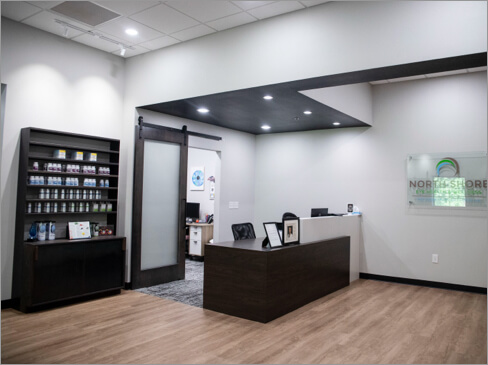
It’s our privilege to care for patients across Cedarburg, Grafton, Mequon, Jackson, Saukville and beyond. Whether you’re visiting us for the first time or returning for ongoing care, we’re honored to support your visual health.
Our Address
- N54W6135 Mill Street, Suite 700
- Cedarburg, WI 53012
Contact Information
- Phone: 262-421-4412
- Fax: 262-421-4413
- Email: [email protected]
Hours Of Operation
Gallery
Check Out
Our Google Reviews
What Patients
Are Saying
My daughter came in with complaints of cloudy vision. Every person we encountered was friendly and professional. I could tell my daughter was comfortable during every test throughout her visit. Dr. assured both of us that her complaint was nothing to worry about!
Relieved and happy with our experience here!
Anne J.
As a new patient, I wasn’t sure exactly what to expect.
My previous experiences had been with large chain eye centers and those experiences were hit or miss. I was pleasantly surprised by my experience at North Shore Eye. They were friendly and thorough with their examinations and Dr. Ross was extremely
knowledgeable and friendly. I would highly recommend!
Amy S.
Extremely knowledgeable, has flexible hours that have allowed me to go in after work. Very prompt in his
responses and overall very friendly environment.
Lauren D.
The most up to date equipment with the most personal care from any optometrist I’ve ever gotten. I would recommend him to anybody who has a complex prescription and hasn’t had good luck with other doctors.
Geoff R.
Dr. Ross and staff were very helpful. When I had a terrible eye infection, Dr. Ross evaluated my eye, prescribed me the proper meds, and scheduled a follow-up to make sure everything was going as expected. Overall, I was very impressed with the level of care and would recommend North Shore to anyone who needs to see an optometrist.
Nate S.

About Us
Specialty Eye Exams
Patient Center
Follow Us
North Shore Eye Health & Wellness
- N54W6135 Mill Street, Suite 700
- Cedarburg, WI 53012
- 262-421-4412
- 262-421-4413
- [email protected]